






















 Visitor Area
 store
store


Fanjing Mountain
Nature's “marvellous handiwork” and millennia of “Buddhist civilisation” blend here in perfect harmony.
The Golden Summit of Fanjingshan


The Golden Summit of Fanjingshan
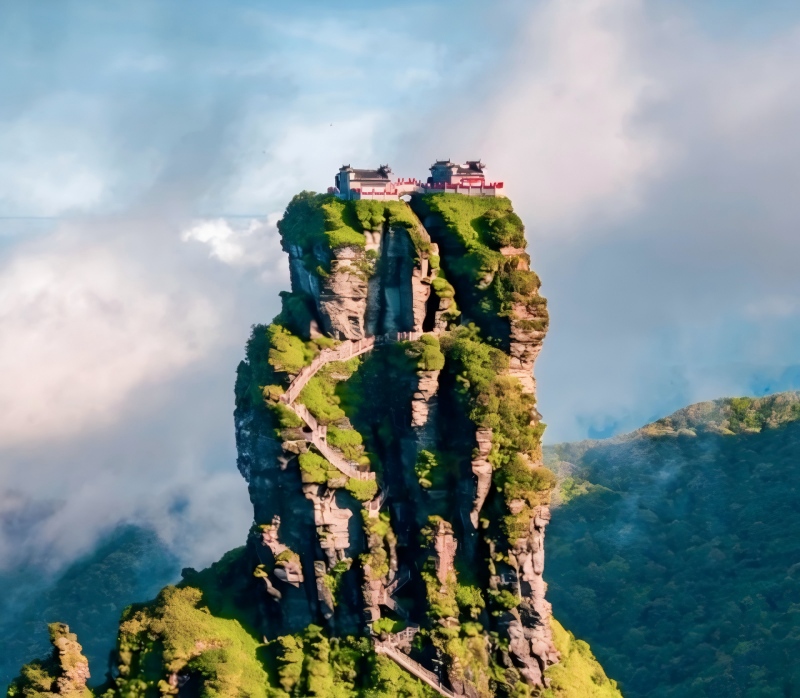
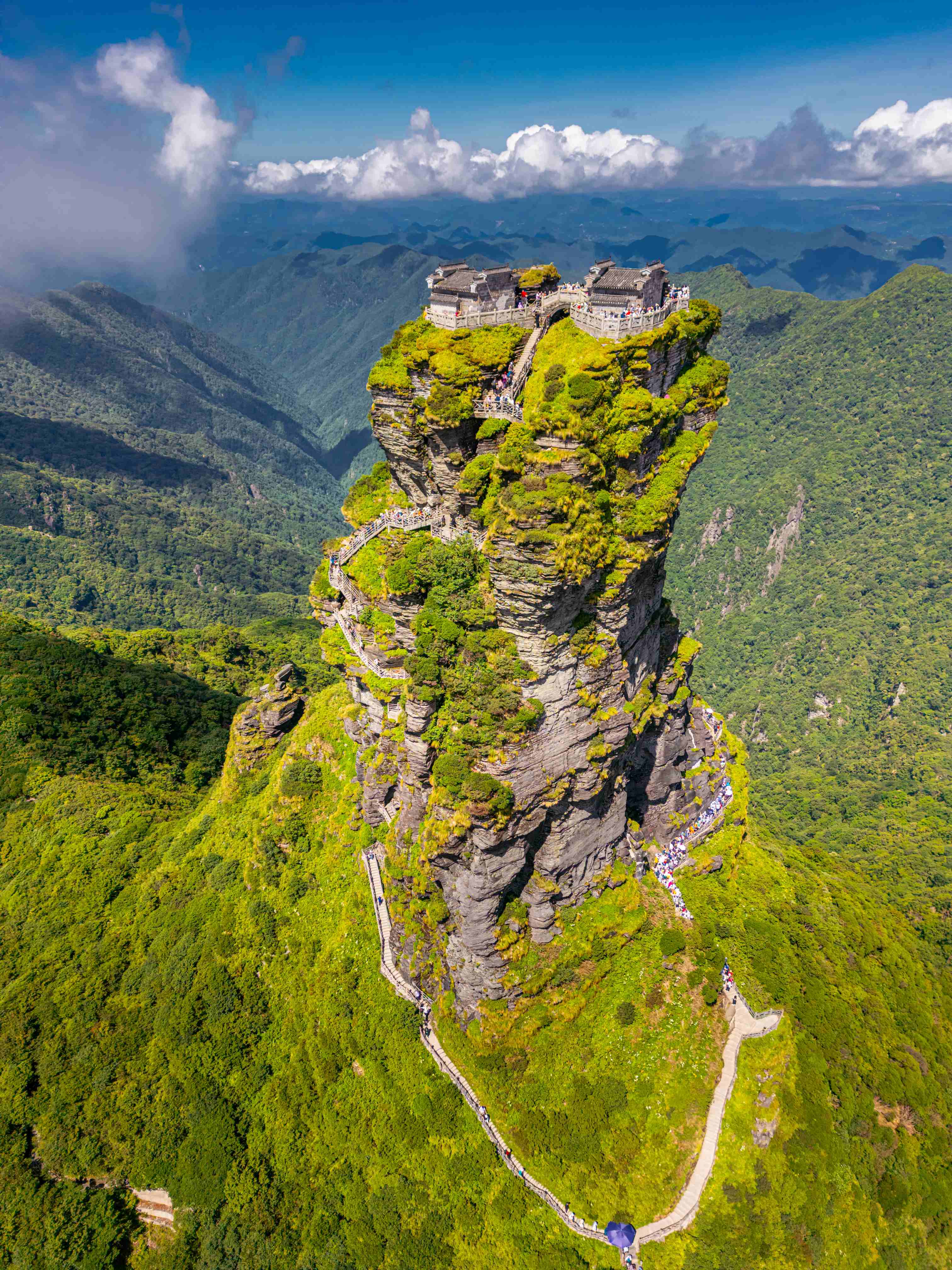
Also known as the Red Cloud Golden Summit, it earned this name as red clouds and auspicious vapors often envelop it at dawn. Sitting at an altitude of 2,336 meters, the summit boasts a vertical height difference of 94 meters from its base to the peak. Viewed from afar, it resembles a traditional steamer used for cooking rice, with the solitary peak standing tall like an exclamation mark amidst the sea of clouds. The upper part is cleaved into two by the Golden Blade Gorge, and the two peaks are linked by a sky bridge, on which the Shakyamuni Hall and the Maitreya Hall are respectively erected.
Travelogue Compilation


Introduction to the scenic area
A World Natural Heritage site and a national 5A-level scenic area, it is hailed as the "City in the Sky." As the main peak of the Wuling Mountains, it is also the sacred site of Maitreya Buddha and ranks alongside Wutai Mountain and Emei Mountain as one of China's five great Buddhist mountains. The Wanli Emperor of the Ming Dynasty once bestowed a special inscription, conferring upon it the title of "The Foremost of All Famous Mountains."Here, nature's magnificent artistry perfectly merges with a thousand years of Buddhist civilization. When you stand atop the Red Cloud Golden Summit, the sea of clouds surges beneath your feet, and the sky bridge connecting two ancient temples—standing for centuries—looms faintly through the mist. At that moment, you feel as if you are standing at the magical boundary between the mortal world and a fairyland.




-
Old Golden SummitHistorically known as "Moon Mirror Mountain," it got its name due to the "moon mirror" phenomenon observed in its rocks.
-
Red Cloud Golden SummitAlso called New Golden Summit, it is the most spectacular scenic spot of Fanjing Mountain. Its majestic peak rises steeply like a pillar reaching towards the sky.
-
10,000-Meter Sleeping BuddhaAlso called the "Buddha within Buddha", it stretches for 10,000 meters, making it the longest of its kind in the world. Shaped remarkably like the Maitreya Buddha, it is also called the "Great Buddha Mountain"—the mountain itself is the Buddha, and the Buddha is the mountain.
-
Guanyin CavePerched on a precipice stands a stone house built into the cliffside, dedicated to the Guanyin Buddha. Visitors who pray sincerely and toss a small stone into the cave are believed to be blessed with children by the Buddha. It is one of the holy places for love on this sacred mountain.
-
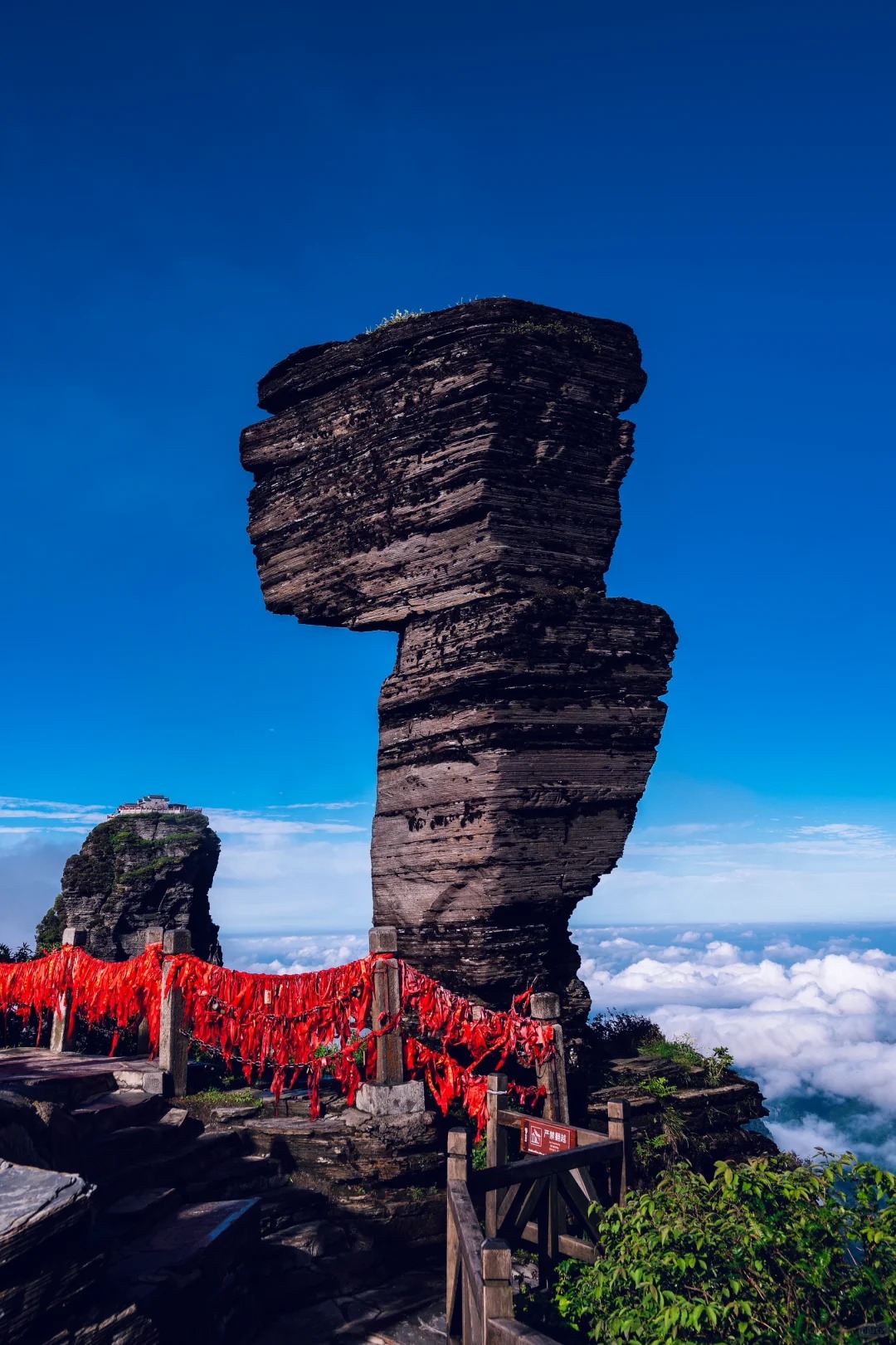
Mushroom RockIt is a single rock standing on the edge of the cliff, over ten meters tall. With a larger upper part and smaller base, it resembles a mushroom in shape, hence its name.
-
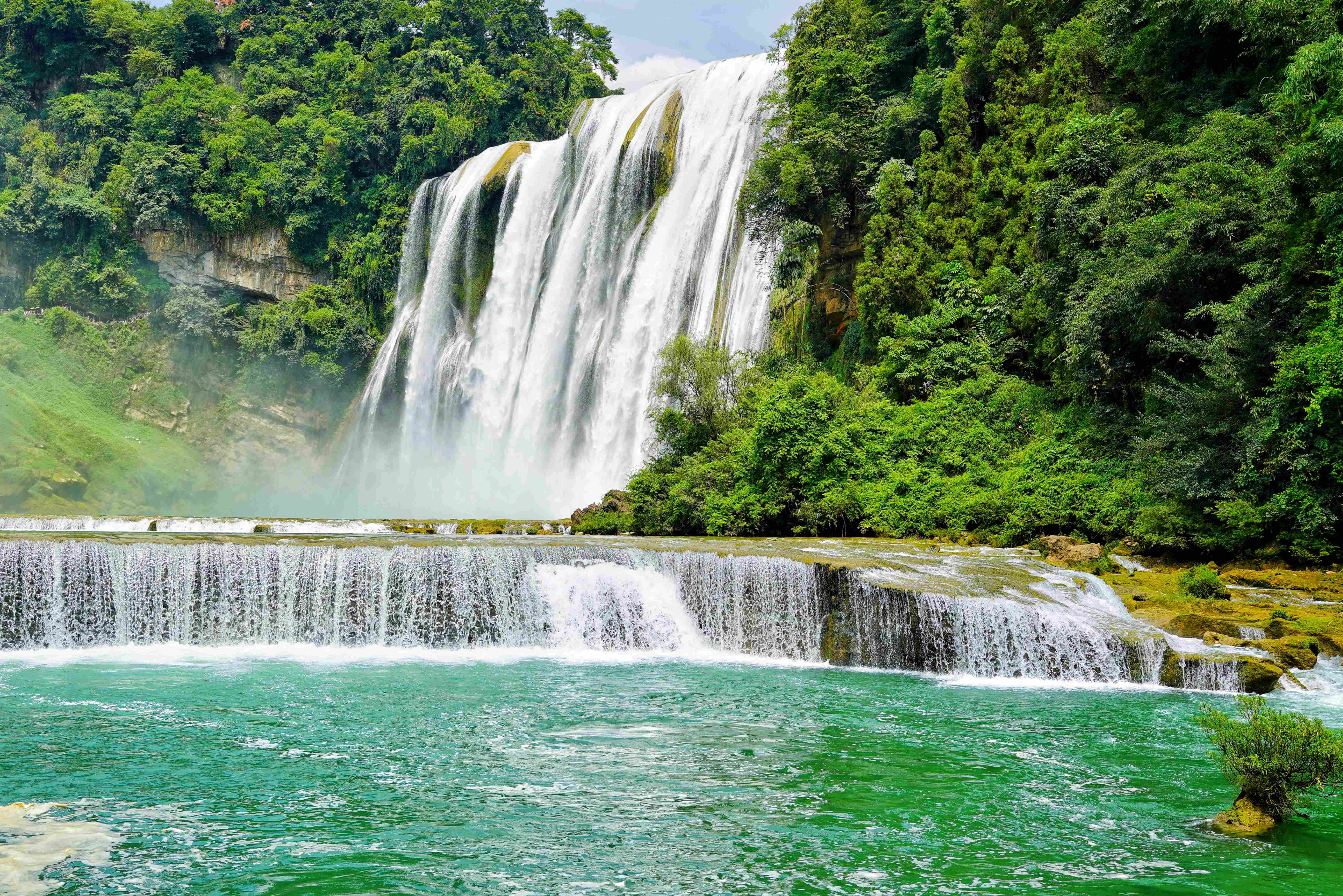
Ten Thousand Volumes WaterfallSituated upstream of the Huangguoshu Waterfall scenic area, this cascade boasts a crest width of 105 metres and a height of 21 metres, making it the broadest waterfall within the Huangguoshu cascade group. During the wet season, the steep slope pool waterfall roars with a thunderous roar, hence its name ‘Roaring Waterfall’.

Cultural Heritage

-
「Cultural Heritage | The Foremost of All Famous Mountains」
As a dual heritage of culture and nature, Fanjing Mountain is not only an ecological sanctuary but also a sacred Buddhist mountain with origins dating back to the Tang Dynasty. Since ancient times, it has held the supreme honor of being "The Foremost of All Famous Mountains".
-
 Huguo TempleFanjing Mountain has been home to hundreds of temples throughout history, both large and small. Among them, Huguo Temple, one of the four imperial temples, covers an impressive area of 3,000 square meters.
 Cheng'en TemplePerched atop the summit of Fanjing Mountain, Cheng'en Temple stands above a 1,000-meter deep valley. Gazing far into the distance, visitors can take in expansive views of spectacular clouds and mists.
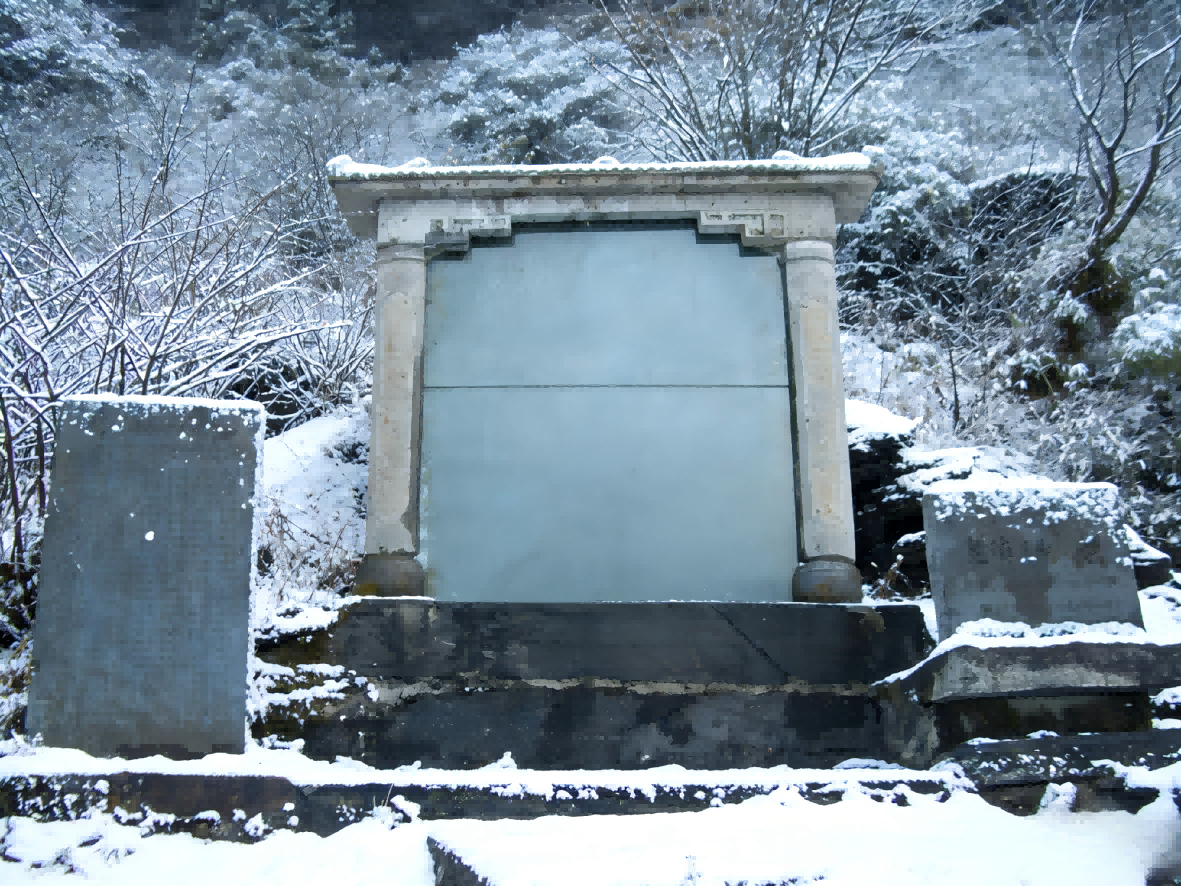 Imperial Edict SteleErected following the imperial conferment of Emperor Wanli of the Ming Dynasty, the Imperial Edict Stele stands at the foot of the Old Golden Summit of Fanjing Mountain. It is 2.9 meters tall, with the central tablet measuring 1.85 meters in height. The stele proclaims Fanjing Mountain as "A Boundless Dharma Realm, a Paradise of Ultimate Bliss".
Recommended Itineraries

Express Cable Car Itinerary (Classic)
Duration
Highlights

In-depth Exploration Itinerary
Duration
Highlights

The Lazy Person's Hiking Route
Duration
Highlights
Recommended Itineraries
-
 Recommended clothingwear comfortable, well-fitting hiking shoes and sportswear, raincoats, cold-proof clothes, sunglasses, hats, etc.
 Protective equipmentsunglasses, sunscreen, oxygen tank, etc.
 Personal belongingssimple medical first-aid kit, water cup, power bank, etc.
 -
 Road travelSearch for "Fanjing Mountain Scenic Area" on your navigation app. It takes about 3 hours from downtown Guiyang or 1.5 hours from Tongren city to reach the destination.
 High-speed trainTake the high-speed train to Tongren Station or Tongren South Station, then transfer to a bus or taxi to the scenic area, which takes about 1 to 1.5 hours.
 AirplaneFly to Tongren Fenghuang Airport, then take a chartered car or tourist shuttle bus to Fanjing Mountain.
 Coach busTake a coach bus from Jiangkou Passenger Transport Terminal to the scenic area. The journey takes about 30 minutes, with buses departing every 40 minutes.
 -
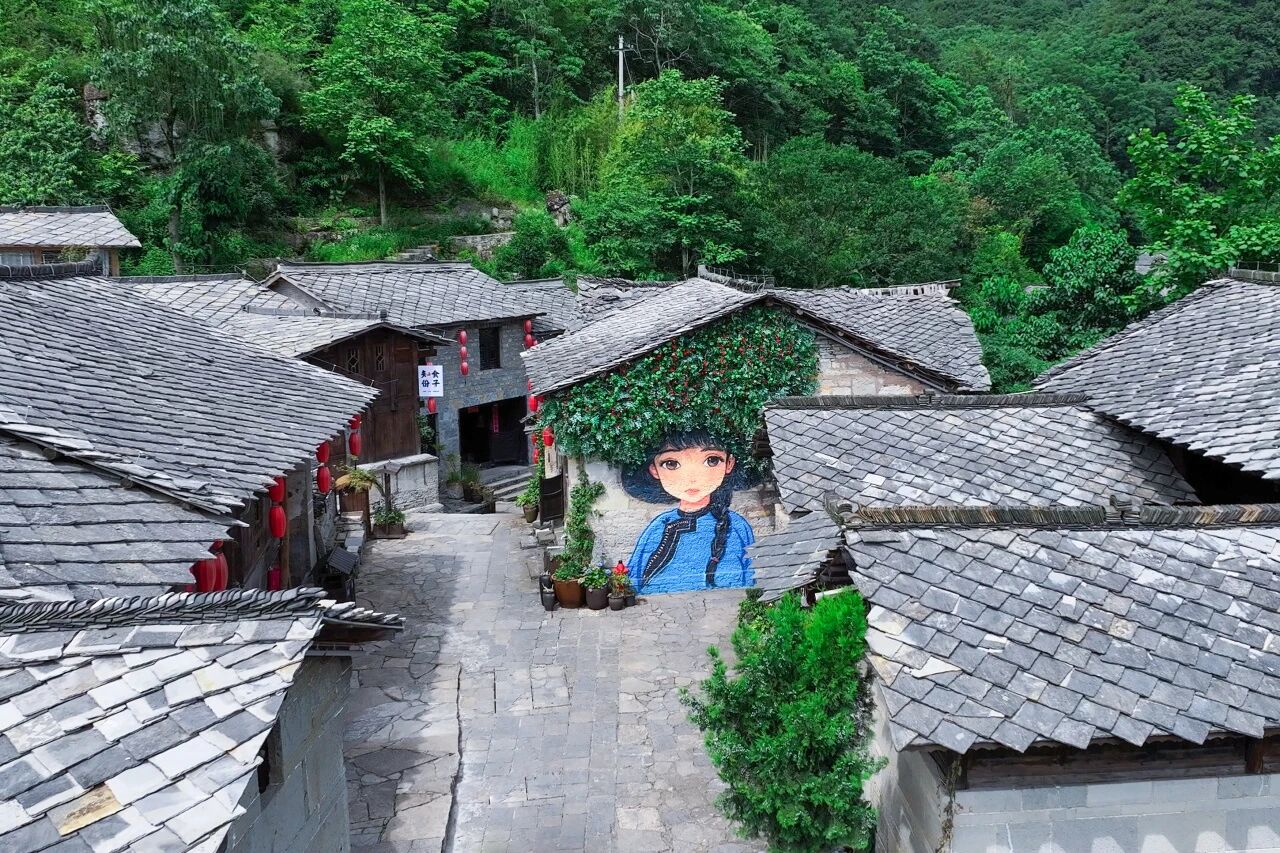
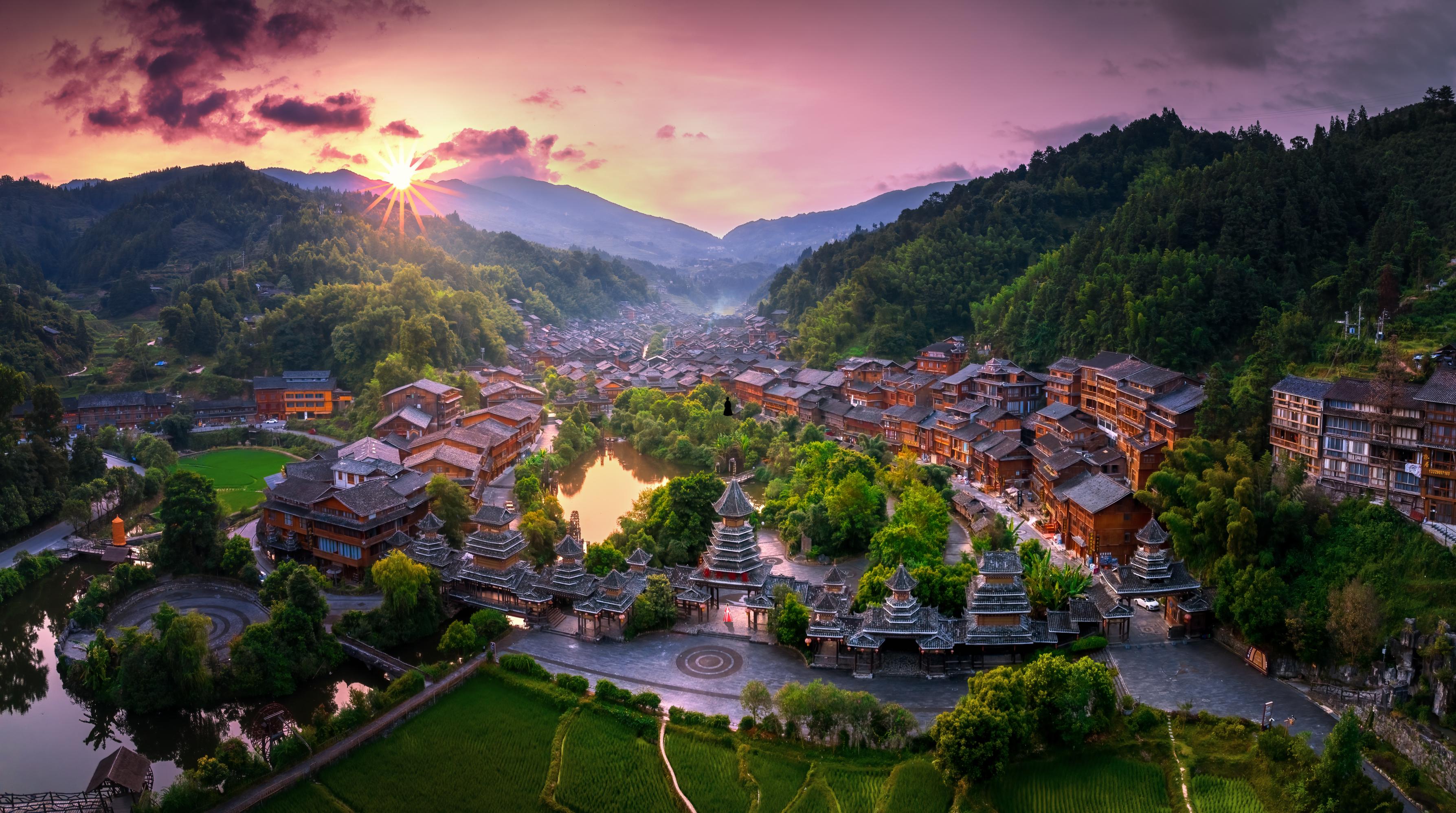
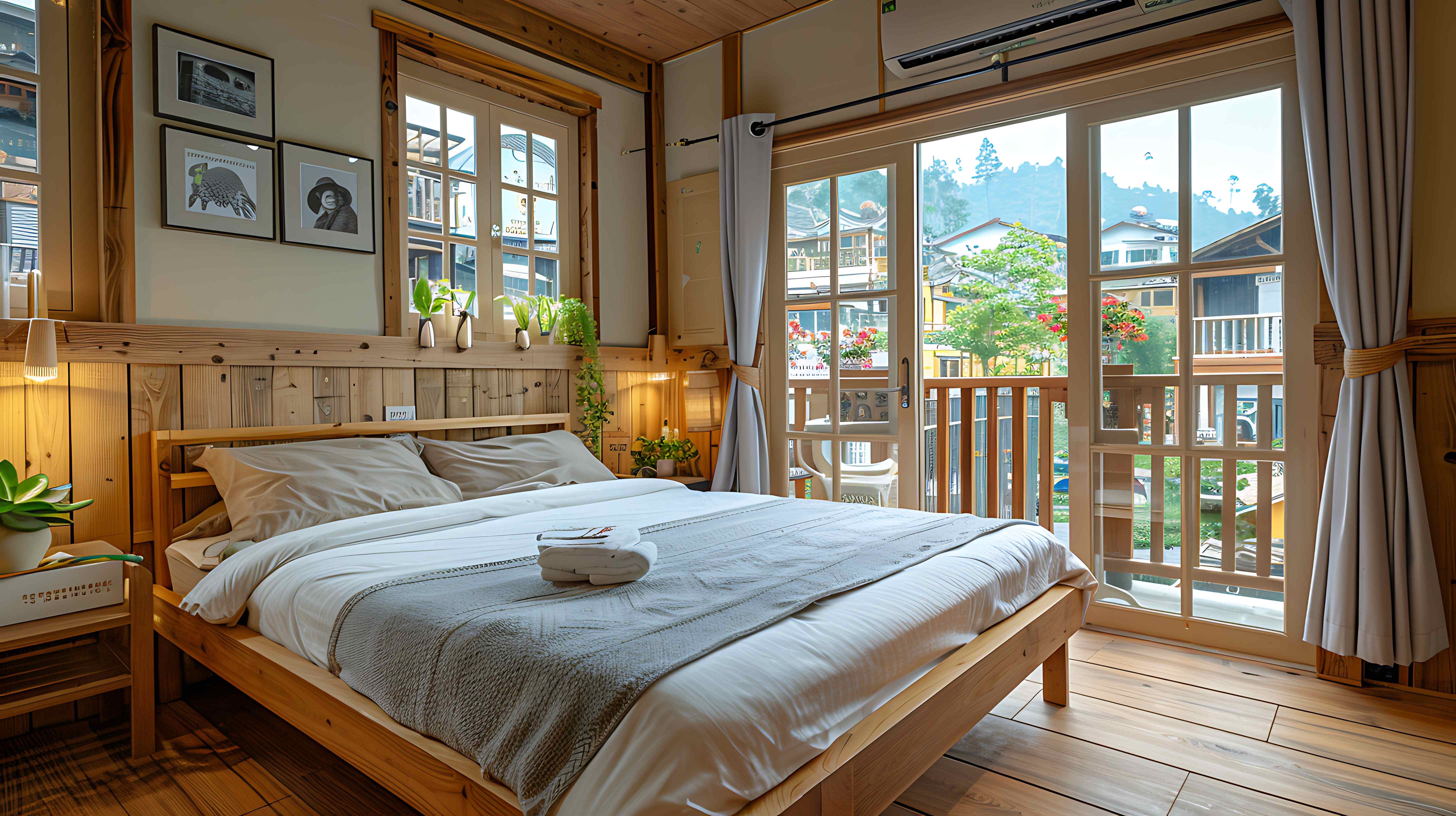 Around the scenic areaYou can choose to stay near the Heiwanhe Tourist Center at the foot of the mountain, Zhaisha Dong Village, Yunshe Village, or Jiangkou County town, according to your budget and needs. These areas offer a wide variety of homestays and hotels.
 Downtown TongrenLocated 60 kilometers away from Fanjing Mountain, it offers a wide range of homestays and hotels to suit different preferences.
Travelogue
“Morning mist gently drapes the mountain ridges; I stand atop the crimson clouds and golden summit, Watching the sea of clouds churn beneath my feet like waves, As if I could reach out and touch the clear light of heaven.”
“Ascending the ancient stone steps, one hears the birdsong mingling with the wind's symphony through the forest. When weariness sets in and one glances back, the entire Wuling Mountain Range lies prostrate beneath a veil of mist woven from clouds.”
“The chimes of the gilded bell pierce the mist as I stand before Cheng'en Temple, palms pressed together. It feels as though a thousand years have crystallised within this sanctuary, nourished by the very clouds and vapours that shroud it.”


A Friendly Reminder for Visitors


100RMB per person (Admission ticket.)
The scenic area has a daily visitor limit of 8,000 people, and advance booking of tickets is required.
Sightseeing bus
24RMB per person (One way)
140RMB per person (Cableway round trip)
Mysterious Guizhou
