






























 Visitor Area
 store
store


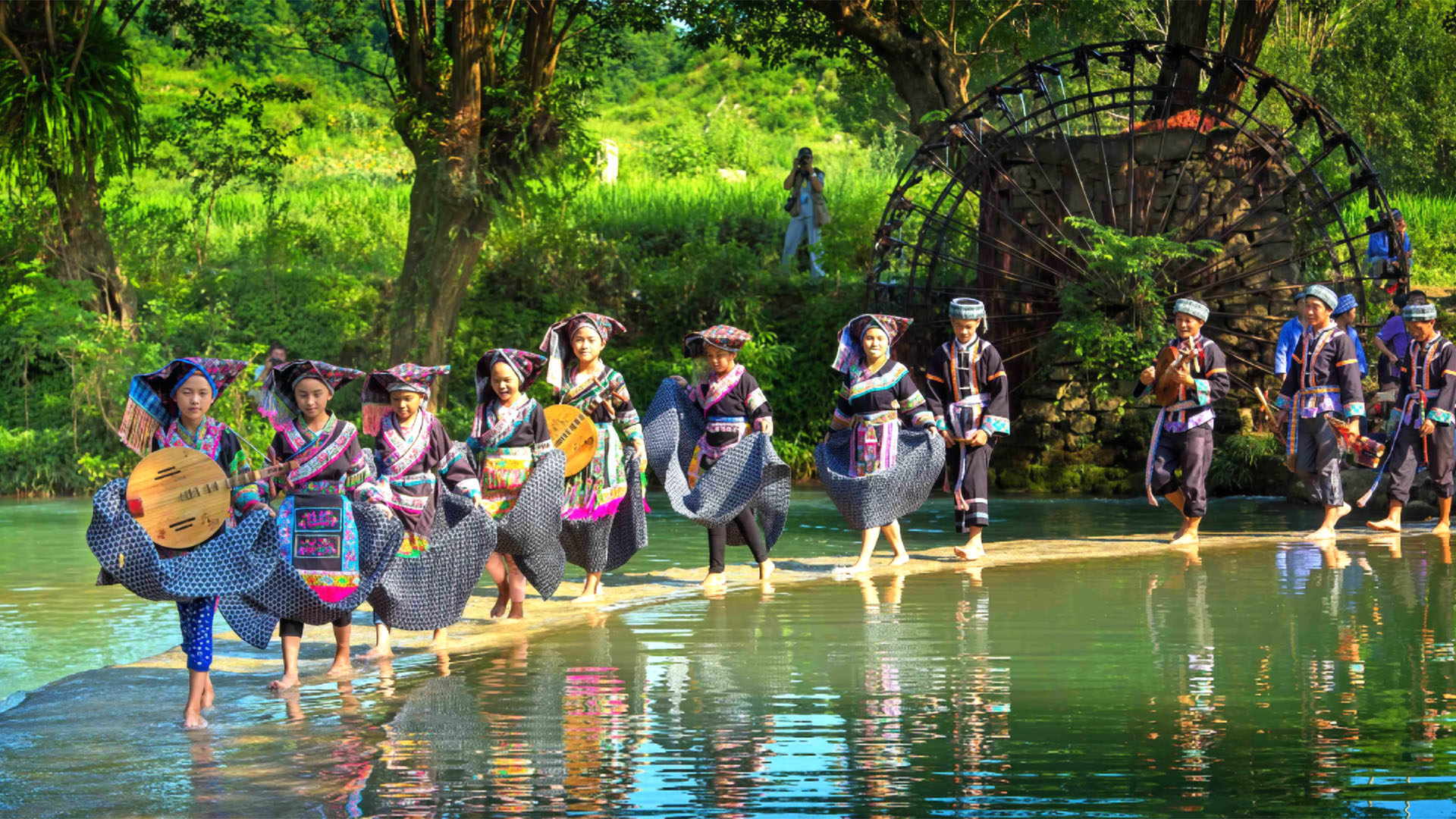
Bouyei Eight‑Tone Sitting Singing
Hailed as the “Artistic Pearl of the Nanpan River Banks.”
The Eight-Tone Sitting Singing, also known as “Bouyei Eight-Tone,” is a folk narrative art form passed down through generations among the Bouyei people, prevalent in the Bouyei-inhabited areas of southwest Guizhou. Originating from the refined court music of the Tang and Song dynasties, its early form primarily featured wind and percussion instruments. After the Yuan and Ming dynasties, it gradually evolved into a mature art form accompanied by string and wind instruments. For centuries, it has been passed down within Bouyei villages along the Nanpan River basin, cherished by the community. In 2006, it was inscribed on the first batch of the National Intangible Cultural Heritage List, acclaimed as a “living fossil of sound” and “the artistic pearl of the Nanpan River.”
Its artistic characteristics are distinct. Performances typically feature eight (or eight to fourteen) musicians seated in a circle, each playing one of eight instruments: the ox-bone fiddle, gourd lute, moon lute, drum, bamboo flute, hairpin, small gong, and small horse gong. They accompany themselves while singing. The singing employs a unique narrative style: performers “step into” roles using first-person narration to sing the story, then “step out” to provide commentary in third person. The vocal style primarily uses the “main melody,” with male and female artists often singing in different octaves to create a striking tonal contrast. Eight-Tone Sitting Singing is deeply intertwined with Buyei life, featuring a rich repertoire of traditional pieces such as “Celebrating the Hall,” “Hu Xi and Nan Xiang,” and “Buyei Wedding Customs.” These are often performed during festive occasions like holidays, weddings, and birthday celebrations. Today, new content reflecting contemporary life has been incorporated into its transmission, ensuring the ancient melodies continue to radiate vitality.
Mysterious Guizhou
